
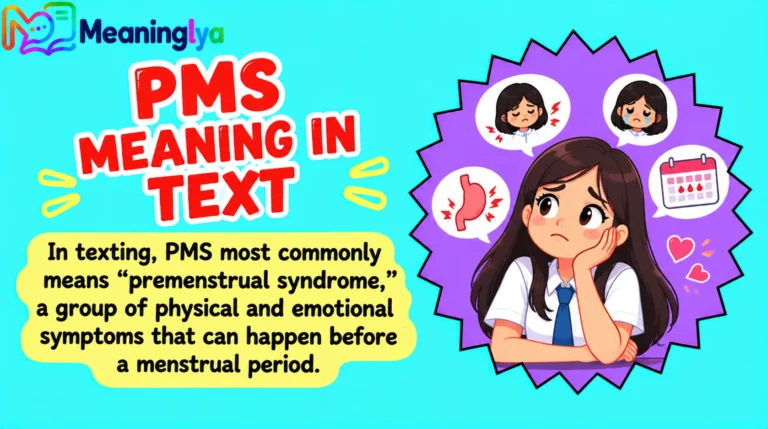
Have you ever received a text with “PMS” and wondered what the person was trying to say? Maybe a friend used it in a casual chat, or you saw it in a social media comment.
Short forms like this can be confusing because the same letters may have different meanings depending on the conversation.
People search for pms meaning in text because they want to understand online slang, avoid awkward replies, and know what someone really means. The good news is that PMS has a few common meanings, and the right one is usually easy to find when you look at the context.
In this guide, you will learn the main meanings of PMS, how people use it in texting, and how to respond naturally.
We will also cover its tone, common mistakes, related slang, and when it is better to avoid using it.
What Does “PMS Meaning in Text” Mean?
In texting, PMS most commonly means “premenstrual syndrome,” a group of physical and emotional symptoms that can happen before a menstrual period. It may also mean “pardon my sarcasm” in some online chats, although that use is much less common. The correct meaning depends on the words, topic, and tone of the conversation.
The Most Common Meanings of “PMS”
PMS is not always internet slang. It is also a well-known health abbreviation. Understanding its different meanings helps you avoid confusing a serious topic with casual online language.
1. Premenstrual Syndrome
The most common meaning of PMS is premenstrual syndrome. It refers to symptoms that some people experience before their menstrual period.
These symptoms can include:
- Mood changes
- Bloating
- Tiredness
- Cramps
- Headaches
- Irritability
- Breast tenderness
People may use PMS in texts when talking about their period, how they feel, or why they are having a difficult day.
Example:
“I’m feeling tired and moody today. PMS is hitting hard.”
Here, PMS refers to premenstrual syndrome.
Another example:
“I think my PMS is starting this week.”
The person is talking about symptoms before their period.
This meaning is common in personal chats, health discussions, and conversations between friends.
2. Pardon My Sarcasm
In some online conversations, PMS can mean “pardon my sarcasm.” This is an informal interpretation, not the standard meaning of the abbreviation.
Someone might use it after making a sarcastic comment to show that they are joking or being sarcastic.
Example:
“Sure, because waiting three hours for a reply is totally fun. PMS.”
The writer may be signaling that the comment is sarcastic.
However, this meaning is not widely used by everyone. Many people will understand PMS as premenstrual syndrome first. If the conversation does not make the intended meaning clear, asking for clarification is the safest choice.
3. Personal Messaging Slang or a Local Meaning
Sometimes people create their own short forms in private chats, gaming groups, or friend circles. PMS may have a special meaning within that group.
For example, a group could use the letters as an inside joke or a shortened phrase. This is not a standard, widely recognized texting definition.
Example:
“PMS before the match?”
If this appears in a gaming group, the meaning may depend on the group’s own vocabulary. You should check the surrounding messages rather than assume a definition.
4. Professional or Business-Related Meanings
PMS can also stand for terms outside casual texting. In business and technology, it may refer to a property management system, especially in hotel or hospitality software.
Example:
“Please update the PMS before the guests arrive.”
In a hotel work chat, PMS may refer to the property management system.
This is not a slang meaning, but it shows why context matters. The same abbreviation can mean something very different in a workplace than in a personal conversation.
How “PMS Meaning in Text” Is Used in Real Conversations
The way PMS appears in a message can help you understand what the sender intends. The topic, relationship, and surrounding words are more useful than the abbreviation alone.
Friends & Casual Texting
Friends may use PMS when discussing mood, tiredness, cramps, or other symptoms before a period. The tone is often relaxed and personal.
Example 1:
“I’m staying home tonight. PMS has me exhausted.”
Meaning: The person is saying that premenstrual symptoms are making them tired.
Example 2:
“Why am I craving chocolate so much? PMS maybe.”
Meaning: The person thinks their cravings may be linked to premenstrual symptoms.
In these chats, PMS is usually not meant to insult anyone. It is simply a short way to talk about a personal experience.
Still, do not assume that every mood change is caused by PMS. A person may be stressed, tired, upset, or dealing with something unrelated.
Instagram & Snapchat
On Instagram and Snapchat, PMS may appear in captions, stories, comments, or direct messages. People often use short forms because social media communication is quick and informal.
Example 1:
“My PMS mood today.”
This could be a caption about feeling different before a period.
Example 2:
“PMS is not letting me enjoy this week.”
The person may be describing discomfort or mood changes.
A social media post alone may not give you enough information to know the exact meaning. If PMS appears in a meme or joke, the writer may be using it in a playful way. If it appears in a health-related story, the standard medical meaning is more likely.
The best approach is to read the full caption and consider what the person was discussing before the abbreviation appeared.
Dating Apps
PMS can appear in dating conversations, especially when people discuss health, moods, or plans. It is a personal topic, so the way it is used depends on trust and comfort.
Example 1:
“I’m not feeling great today. PMS.”
Meaning: The person may be explaining why they are tired or uncomfortable.
A considerate response could be:
“Sorry you’re not feeling well. Hope you feel better soon.”
Avoid treating PMS as a reason to dismiss someone’s feelings. If a person says they are upset, listen to what they are actually saying instead of assuming the cause.
PMS is not automatically romantic or flirty. Its meaning is usually health-related unless the surrounding conversation clearly suggests otherwise.
Gaming & Online Communities
In gaming groups, PMS may have a different meaning or may not be common slang at all. Some players use abbreviations specific to their game, team, or community.
Example:
“Check the PMS before the next round.”
In this situation, the phrase around PMS may reveal whether it refers to a system, a team term, or an inside joke.
If you are unsure, ask:
“What does PMS mean here?”
This is a simple way to avoid misunderstanding a group-specific abbreviation.
Do not assume that a term used in one gaming server has the same meaning in another. Online communities often create their own language.
Work or Professional Chat
In a professional chat, PMS may refer to a business system or a different technical term. It should not automatically be interpreted as premenstrual syndrome.
Example:
“The hotel PMS is down. Can someone check it?”
Here, PMS most likely means property management system.
In another workplace conversation, someone might use PMS to discuss a health matter. The meaning depends on the subject and the people involved.
When writing professionally, it is better to spell out the term the first time if there is any chance of confusion. Clear language saves time and prevents mistakes.
Is “PMS Meaning in Text” Rude, Flirty, or Offensive?
PMS is not automatically rude, flirty, or offensive. Its tone depends on how it is used and how the other person understands it.
When PMS Feels Neutral
PMS is neutral when someone uses it to describe a health experience or explain how they feel.
Example:
“I have PMS symptoms today, so I’m taking it easy.”
This is a straightforward personal statement.
When PMS Feels Supportive
The abbreviation can appear in a caring conversation where someone is checking on a friend.
Example:
“You mentioned PMS earlier. Are you feeling any better?”
This response shows attention and concern without making assumptions.
When PMS Feels Rude
PMS can become rude when someone uses it to dismiss another person’s emotions or mock them.
Example:
“Are you angry because of PMS?”
This may sound disrespectful, especially if the person has not mentioned PMS. It reduces their feelings to a stereotype instead of listening to their actual concerns.
Another example is using PMS as an insult during an argument. That can feel personal and hurtful.
When PMS Feels Flirty
PMS is not a common flirty abbreviation. It may appear in a romantic chat when someone shares personal information, but the letters themselves do not create a romantic meaning.
For example:
“I’m not feeling well because of PMS.”
This is a personal health statement, not a flirtatious message.
If someone uses PMS in a dating conversation, focus on the full message rather than trying to find a hidden romantic meaning.
Why Context Matters
Text messages do not include facial expressions, voice, or body language. A short abbreviation can therefore sound different from what the sender intended.
Before judging a message, consider:
- What was the conversation about?
- Does the sender usually use abbreviations?
- Is the relationship friendly, professional, or romantic?
- Does the message sound serious, joking, or dismissive?
These details help you interpret PMS more accurately.
How to Respond When Someone Says “PMS”
Your reply should match the meaning and tone of the original message. If the sender is talking about health, a caring response is usually better than a joke.
Casual Replies
Use these when a friend mentions PMS in a relaxed conversation.
- “Oh, I hope you feel better soon.”
- “That sounds uncomfortable.”
- “Take it easy today.”
- “Want to talk about it?”
Example:
Friend: “PMS is making me so tired.”
You: “That sounds rough. Get some rest.”
Funny Replies
A light joke may work when you know the person enjoys that style of humor and has already made the conversation playful. Avoid joking about their symptoms if they seem uncomfortable.
- “Sounds like today needs a comfort-food break.”
- “Sending you a virtual rest day.”
- “Hope tomorrow is kinder to you.”
Keep the humor gentle. Do not make the person feel that their discomfort is silly.
Neutral Replies
Neutral replies are useful when you do not know the person well or are unsure how serious they are.
- “Oh, I understand.”
- “Thanks for explaining.”
- “I hope you feel better.”
- “Do you need anything?”
These responses are polite and do not assume too much.
Professional Replies
If PMS appears in a workplace chat and refers to a health issue, keep your response respectful and private when appropriate.
- “I hope you feel better soon.”
- “Please let me know if you need to adjust the schedule.”
- “Thanks for letting me know.”
If PMS refers to a property management system, respond to the actual work issue:
“I’ll check the system and update you.”
The key is to identify the meaning before replying.
What If You Do Not Understand PMS?
You can simply ask:
“What do you mean by PMS?”
Or:
“Do you mean premenstrual syndrome?”
A short clarification is better than sending a confident but incorrect reply.
Common Misunderstandings About “PMS”
PMS is easy to misunderstand because it can refer to a health condition, an informal phrase, or a professional system.
1. Assuming PMS Always Means Premenstrual Syndrome
This is the most common mistake. In a health-related conversation, PMS usually means premenstrual syndrome. But in a hotel work chat, it may refer to a property management system.
Better approach: Read the complete message and identify the topic first.
2. Thinking PMS Is Always an Insult
PMS itself is not an insult. It is a standard health abbreviation. However, using it to mock someone or dismiss their feelings can make the message offensive.
Better approach: Look at the intention and tone.
3. Assuming Every Mood Change Is PMS
People can feel angry, sad, or tired for many reasons. It is unfair to assume that someone’s emotions are caused by PMS without knowing what they are experiencing.
Better approach: Ask how they feel instead of making a guess.
4. Confusing PMS With PMDD
PMS and PMDD are related but not identical. PMS refers to a range of symptoms before a period. PMDD, or premenstrual dysphoric disorder, is a more severe condition that can cause significant emotional and physical symptoms.
Better approach: Do not use the terms as if they mean exactly the same thing.
5. Believing PMS Has One Universal Slang Meaning
Internet abbreviations change across groups and platforms. A meaning used by one person may not be understood by another.
Better approach: Treat uncommon meanings as context-dependent.
6. Reading Sarcasm Into Every Short Message
Some people use brief messages because they are busy, not because they are being rude. PMS alone does not prove that someone is angry or sarcastic.
Better approach: Consider the rest of the conversation before judging the tone.
Similar Slang Terms You Should Know
These related terms can help you understand conversations about texting, periods, and online language.
- PMDD: Premenstrual dysphoric disorder, a more severe condition related to the menstrual cycle.
- Period: The common term for menstrual bleeding.
- Cycle: The menstrual cycle, which includes changes throughout the month.
- Cramps: Pain or discomfort that can happen during menstruation.
- Bloating: A feeling of fullness or swelling, sometimes linked to PMS.
- Mood swings: Quick or noticeable changes in mood.
- TMI: “Too much information,” often used when someone shares more personal detail than expected.
- IDK: “I don’t know,” a common texting abbreviation.
- TBH: “To be honest,” often used before a personal opinion.
- IMO: “In my opinion,” used to introduce a viewpoint.
- NGL: “Not gonna lie,” often used before an honest statement.
- LOL: “Laughing out loud,” commonly used to show amusement.
Not all of these terms are direct synonyms for PMS. They are related to the kinds of conversations where people may discuss personal feelings, health, or casual texting.
When You Should Avoid Using “PMS”
PMS is a familiar abbreviation, but it is not suitable for every situation. Choosing clear and respectful language helps prevent confusion.
Professional Settings
Avoid using PMS as casual slang in a formal email or work message unless everyone understands the meaning. If you mean premenstrual syndrome, consider spelling it out when the topic is relevant.
For example:
“I’m experiencing premenstrual symptoms and may need to rest.”
In a hotel or business setting, explain what PMS means if the abbreviation could be unclear.
Cross-Cultural Chats
People from different countries and language backgrounds may understand abbreviations differently. Some may know PMS as a health term but not recognize an informal slang meaning.
If you are chatting with someone from another culture, use simple words and avoid assuming they know every internet abbreviation.
Sensitive Situations
Be careful when discussing menstruation, mood, or health. Not everyone wants to share personal details, and jokes about PMS can make someone uncomfortable.
Avoid using PMS to:
- Dismiss someone’s anger or sadness
- Make assumptions about their body
- Embarrass someone in a group chat
- Mock a person’s health concerns
A respectful message is usually the better choice.
When Clarity Matters More Than Speed
If the abbreviation could lead to a misunderstanding, spell out the intended meaning. This is especially useful in medical, workplace, or serious personal conversations.
Clear communication is more important than saving a few letters.
FAQs
What does PMS mean in text?
PMS most commonly means premenstrual syndrome, a group of symptoms that can happen before a menstrual period. The exact meaning depends on the conversation.
Is PMS a slang word?
PMS is primarily a health abbreviation, not slang. Some people may use it in casual online conversations, but its standard meaning is premenstrual syndrome.
What does PMS mean on Snapchat?
On Snapchat, PMS usually means premenstrual syndrome when the conversation is about periods, mood, or health. The meaning may vary if it appears in a joke or private group slang.
Can PMS mean “pardon my sarcasm”?
Yes, some people use PMS to mean “pardon my sarcasm.” This is a less common interpretation, so you should check the context before assuming that meaning.
Is PMS rude to say?
PMS is not inherently rude. It can become disrespectful if someone uses it to mock a person, dismiss their emotions, or make unwanted assumptions about their health.
How do I respond to PMS in a text?
If someone means premenstrual syndrome, you can reply with kindness, such as “I hope you feel better soon.” If you are unsure of the meaning, ask for clarification.
What is the difference between PMS and PMDD?
PMS describes symptoms that occur before a period. PMDD is a more severe condition that can cause significant emotional and physical symptoms. They are related but not the same.
CONCLUSION
PMS most commonly means premenstrual syndrome in text messages. It may also have other meanings, such as “pardon my sarcasm,” or refer to a professional system in a workplace conversation.
The best way to understand PMS is to look at the topic, surrounding words, and tone. Do not assume it is always slang, an insult, or a hidden romantic message.
When you understand the context, you can reply with confidence and respect.
Whether you are chatting with friends, using Snapchat, or communicating at work, clear texting helps avoid confusion and makes conversations easier.

Graham Prescott is a language enthusiast who enjoys exploring English words, meanings, and modern expressions. He writes clear, easy-to-understand content to help readers improve their vocabulary and everyday English.