
When a guy sends you a short text, it can leave you wondering what he really means. Is he being friendly, showing interest, or simply replying without much thought? This is why many people search for the meaning in text from a guy.
They want to understand the words behind his message and the feelings that may come with them.
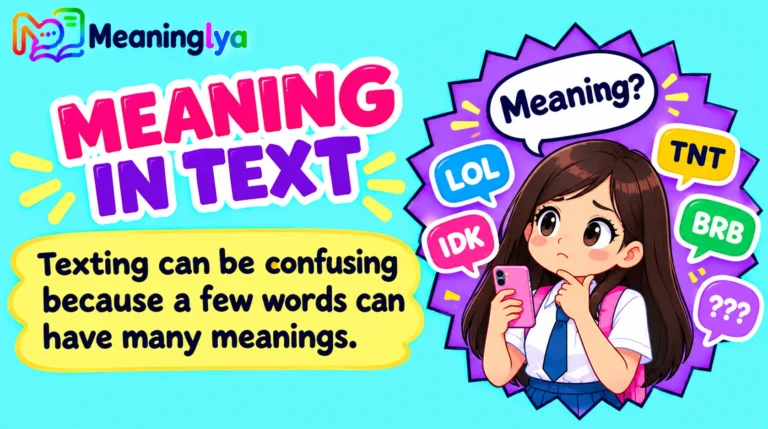
Texting can be confusing because a few words can have many meanings. A guy might use a common slang term with his friends, but the same word may sound flirty when he sends it to someone he likes.
The meaning can also change based on your relationship, the conversation, and the way he normally texts.
In this guide, you will learn how to understand messages from a guy without guessing too much. We will explain common meanings, real texting examples, tone, possible romantic interest, and smart ways to respond.
By the end, you will know how to read his messages more clearly and avoid common texting mistakes.
What Does “Meaning in Text From a Guy” Mean in Text?
The phrase meaning in text from a guy refers to understanding what a guy intends when he sends a word, phrase, or slang message.
It may show friendship, interest, humor, care, or simple conversation. The correct meaning depends on the exact words, context, timing, and his usual texting style.
A message from a guy does not always have a hidden romantic meaning. Sometimes he is just chatting casually. In other cases, his words may suggest that he likes you or wants to get closer.
Here are four common interpretations:
- Friendly communication: He is talking to you as a friend.
- Romantic interest: He may be trying to show attraction or affection.
- Playful teasing: He is joking or trying to make you laugh.
- Simple information: He is sharing something without an emotional message.
The best way to understand his text is to look at the full conversation instead of focusing on one word alone.
The Most Common Meanings of “Meaning in Text From a Guy”
There is no single meaning behind every text a guy sends. His message may express different feelings depending on the situation. Below are the most common meanings and examples to help you understand his words.
1. He Is Being Friendly
A guy may text you because he enjoys your friendship. He might ask about your day, share a funny video, or send a casual greeting. These messages can feel warm, but they do not automatically mean he has romantic feelings.
Example:
Guy: Hey, how was your day?
This usually shows that he wants to start a conversation or check in with you. It could be friendly or romantic, depending on the wider context.
2. He May Be Showing Romantic Interest
Sometimes a guy sends messages to show that he likes you. He may ask personal questions, remember small details, or look for reasons to keep talking.
Example:
Guy: I was thinking about you today.
This can suggest affection or romantic interest. However, one message is not enough to confirm his feelings. His actions and consistent behavior matter more.
3. He Is Trying to Make You Laugh
Humor is a common part of texting. A guy may use slang, jokes, or playful comments because he feels comfortable with you.
Example:
Guy: You really did that? I’m dead.
Here, “I’m dead” usually means he finds something extremely funny. It is not a literal statement.
4. He Wants to Keep the Conversation Going
A short text can sometimes be a way to continue talking without starting a serious topic. He may send a simple question or comment to keep your chat active.
Example:
Guy: What are you doing rn?
“Rn” means “right now.” He may simply be asking what you are doing, or he may be looking for a chance to spend time with you.
5. He Is Showing Care or Concern
A thoughtful message may show that he cares about your well-being. This can happen between friends, family members, or romantic partners.
Example:
Guy: Did you get home safely?
This message often shows concern. It is a positive sign of care, but it does not prove romantic attraction by itself.
6. He Is Being Brief or Busy
Not every short reply has an emotional meaning. A guy may be at work, studying, traveling, or dealing with something else.
Example:
Guy: K, talk later.
He may simply be busy. Before assuming that he is upset or uninterested, consider how he normally communicates and whether he follows up later.
7. He Is Teasing You
Friendly teasing can be a way to build closeness. Some guys use playful challenges or jokes when they feel comfortable with someone.
Example:
Guy: You always take forever to reply.
This could be a joke, a sign that he noticed your absence, or a genuine complaint. His tone and your relationship help explain the meaning.
8. He Is Testing Your Interest
A guy may ask questions or make slightly playful comments to see how you respond. This can happen when he is unsure whether you like him.
Example:
Guy: So, do you miss me or what?
He may be joking, flirting, or looking for reassurance. A playful reply can help you understand whether he wants to continue that kind of conversation.
9. He Is Being Affectionate
Words such as “babe,” “bbg,” “luv,” or “cutie” can express affection. However, some people use these terms with close friends, so the relationship matters.
Example:
Guy: Goodnight, luv.
This may sound sweet or romantic, but it can also be a casual habit. Look at whether he uses the same language with other people.
10. He Is Just Sharing Information
Sometimes a text means exactly what it says. A guy may send a message to tell you something useful or interesting.
Example:
Guy: The movie starts at 8.
There may be no hidden emotion. Not every message needs to be decoded.
How “Meaning in Text From a Guy” Is Used in Real Conversations
The same words can sound different across texting platforms and social situations. Here is how to understand messages in common settings.
Friends & Casual Texting
Among friends, guys often use short forms and slang without thinking deeply about their meaning. Terms like “bro,” “lol,” “brb,” “wyd,” and “fr” are common.
Example:
Guy: Bro, you need to see this video lol.
This is likely casual and friendly. The word “bro” does not usually mean romantic interest.
Another example:
Guy: Fr, that was the best game ever.
“Fr” means “for real.” He is showing agreement or strong support for what was said.
In casual texting, focus on the overall mood. If he jokes, shares things, and talks naturally, he may simply enjoy your friendship.
Instagram & Snapchat
Social media messages often include reactions to stories, pictures, videos, and posts. A guy may reply to your story because he finds it interesting or wants to start a conversation.
Example:
Guy: Okayyy, this look is nice.
This could be a compliment or a playful way to show attraction. The extra letters may add emphasis, but they do not prove romantic feelings.
Another example:
Guy: Send me that pic.
He may want the picture for a simple reason. If the message involves personal images, you should only share what you feel comfortable sharing.
On Snapchat, quick snaps and short messages are often casual. A consistent pattern of meaningful conversations may tell you more than one reaction.
Dating Apps
On dating apps, messages often carry more romantic context because people are there to meet potential partners. Still, interest levels vary.
Example:
Guy: You seem really fun to talk to.
This is generally a positive sign. He may be interested in getting to know you better.
Another example:
Guy: We should grab coffee sometime.
This suggests he may want to meet in person. A clear plan with a date and time is more meaningful than a vague promise.
If a guy sends flirty words but never makes an effort to communicate or meet, do not assume that his messages show serious interest.
Gaming & Online Communities
Gaming chats have their own language. Guys may use terms such as “gg,” “wp,” “noob,” “carry,” and “clutch.”
Example:
Guy: GG, you played well.
“GG” means “good game.” It is usually a polite or friendly message after a match.
Another example:
Guy: Bro, you carried us.
“Carried” means someone performed very well and helped the team win. This is usually praise, not romantic language.
In online communities, context matters. A phrase that sounds rude outside gaming may be normal playful banter inside a game.
Work or Professional Chat
Professional messages should be read in a practical way. A guy at work may send short texts because he wants to finish a task efficiently.
Example:
Guy: Can you send the report by 3?
This is a work request. It should not be interpreted as a personal or romantic message.
Another example:
Guy: Thanks for your help today.
This shows appreciation. It is positive and polite, but it does not automatically suggest attraction.
In professional chats, focus on the task, clarity, and respectful communication.
Is “Meaning in Text From a Guy” Rude, Flirty, or Offensive?
A text from a guy can be friendly, flirty, rude, or offensive depending on the words and the situation. The same phrase may feel different when sent by a close friend compared with someone you barely know.
When a Message Feels Friendly
Friendly messages often include casual greetings, jokes, and simple questions.
Example:
Guy: Hey bro, what’s up?
This is usually a relaxed greeting. It does not normally suggest romance.
When a Message Feels Flirty
Flirty messages may include compliments, playful teasing, or personal attention.
Example:
Guy: You looked really good today.
This may show attraction, especially if he does not normally compliment everyone. Still, a compliment alone is not proof of romantic intent.
When a Message Feels Rude
A message can feel rude when it dismisses your feelings, uses insults, or ignores a clear boundary.
Example:
Guy: Whatever, I don’t care.
The meaning depends on the conversation. He may be frustrated, joking, or being dismissive. If the message hurts you, it is reasonable to ask what he meant.
When a Message Is Offensive
Some words can be offensive when they target someone’s identity, appearance, background, or personal boundaries. If a guy uses insulting language toward you, you do not have to accept it as a joke.
Context Psychology: Why the Same Text Feels Different
People understand text through context. They use previous conversations, punctuation, timing, relationship history, and personal expectations.
For example:
Guy: Fine.
This might mean he agrees, feels upset, or wants to end the conversation. Without context, it is impossible to know for sure.
The safest approach is to avoid making strong assumptions from one short message. Look for patterns and ask directly when needed.
How to Respond When Someone Says “Meaning in Text From a Guy”
Since the phrase is a search question rather than a typical message someone sends, your response should match the actual word or phrase the guy used. Here are useful reply styles for different situations.
Casual Replies
Use these when you want to keep the conversation easy and natural.
- “Haha, what do you mean?”
- “Oh really?”
- “Got it.”
- “Tell me more.”
- “What made you say that?”
Funny Replies
Use playful responses when the conversation is light and you feel comfortable joking.
- “Okay, mysterious guy.”
- “That needs an explanation.”
- “Are you trying to confuse me?”
- “Interesting choice of words.”
- “Now I’m curious.”
Neutral Replies
Use these when you want a clear answer without sounding too serious.
- “What do you mean by that?”
- “Can you explain?”
- “I’m not sure I understand.”
- “Are you being serious?”
- “Could you clarify?”
Professional Replies
If the message is related to work, keep your response polite and focused.
- “Could you please clarify?”
- “Thank you for explaining.”
- “I understand.”
- “Could you provide more details?”
- “I’ll check and get back to you.”
If You Think He Is Flirting
You can respond warmly without making assumptions.
- “Are you trying to flirt with me?”
- “That’s a sweet thing to say.”
- “What makes you say that?”
- “Is that your way of complimenting me?”
If the Message Makes You Uncomfortable
You can set a clear boundary.
- “I’m not comfortable with that.”
- “Please don’t talk to me that way.”
- “What do you mean by that comment?”
- “I’d rather keep the conversation respectful.”
You do not need to reply in a flirty or friendly way if the message makes you uncomfortable.
Common Misunderstandings About “Meaning in Text From a Guy”
Texting is easy to misread. Here are some common mistakes people make when trying to understand a guy’s messages.
Mistake 1: Assuming Every Compliment Means He Likes You
A guy may compliment your clothes, work, or personality because he is friendly or polite. A compliment can show appreciation without romantic interest.
Better approach: Look at whether he shows consistent interest and respects your boundaries.
Mistake 2: Thinking a Short Reply Means He Is Angry
A message like “k” or “sure” may seem cold, but the guy could be busy or naturally brief.
Better approach: Compare the message with his normal texting style.
Mistake 3: Believing Every Slang Word Has One Meaning
Words like “bro,” “babe,” “love,” and “bestie” can change meaning depending on who uses them.
Better approach: Consider the relationship and the surrounding conversation.
Mistake 4: Confusing Attention With Serious Interest
A guy may text often because he enjoys attention, friendship, or casual flirting. Frequent messages alone do not prove that he wants a relationship.
Better approach: Look for honesty, consistency, and clear actions.
Mistake 5: Ignoring the Tone of the Conversation
The words “you’re crazy” can be a joke between friends or an insult in a serious argument.
Better approach: Consider punctuation, previous messages, and whether the comment respects you.
Mistake 6: Assuming Delayed Replies Always Mean Disinterest
People have different schedules and communication habits.
Better approach: Look at the overall pattern instead of one late reply.
Mistake 7: Overthinking Every Word
It is easy to spend too much time analyzing a simple message.
Better approach: If the meaning matters, ask a clear question rather than guessing for hours.
Similar Slang Terms You Should Know
Understanding common texting slang can help you read messages from a guy more easily.
- WYD: What are you doing?
- WYA: Where are you?
- RN: Right now.
- FR: For real; used to show agreement or honesty.
- LOL: Laughing out loud.
- ILY: I love you.
- LUV: A casual or affectionate form of “love.”
- BBG: Often means “baby girl,” but it can have other meanings.
- GG: Good game.
- IDK: I don’t know.
- BTW: By the way.
- HMU: Hit me up; contact me later.
Remember that slang meanings can vary between friend groups, regions, and online platforms. Always consider the conversation before deciding what a term means.
When You Should Avoid Using “Meaning in Text From a Guy”
The search phrase itself is not offensive, but guessing someone’s feelings from a message can lead to confusion. When communicating, choose clear words and avoid making assumptions.
Professional Settings
In work chats, avoid using overly personal slang or assuming that a friendly message is romantic. Keep your language clear and respectful.
For example, if a coworker says “Thanks, you’re the best,” it may simply be professional appreciation.
Cross-Cultural Chats
Slang can mean different things in different countries and communities. A word that sounds friendly to one person may sound strange or rude to another.
When chatting with someone from a different background, use simple language if you are unsure.
Sensitive Situations
Avoid joking about serious matters such as grief, personal problems, or conflict. A phrase that seems funny in a casual chat may hurt someone in a sensitive moment.
When You Are Unsure of the Meaning
If you do not understand a guy’s message, it is better to ask than to guess. Clear communication helps prevent unnecessary stress and misunderstandings.
FAQs
1. What does it mean when a guy texts you first?
It usually means he wants to start a conversation. He may be friendly, interested, or simply have something to say. The reason depends on the context and his behavior.
2. How can I tell if a guy is flirting over text?
Look for repeated compliments, playful teasing, personal questions, and clear interest in spending time with you. One flirty message alone does not confirm his feelings.
3. Does a short text from a guy mean he is not interested?
Not always. He may be busy, tired, or naturally brief. Look at his overall communication pattern instead of one short reply.
4. What does it mean when a guy calls you “babe” in text?
“Babe” can be affectionate or flirty, but some people use it casually. Your relationship and his usual language help determine the meaning.
5. Why does a guy use slang when texting me?
He may use slang because it is common in his friend group, makes texting faster, or helps him sound relaxed. Slang does not automatically show romantic interest.
6. Should I ask a guy what he means by his text?
Yes. If a message confuses you, asking politely is often the best choice. A simple “What do you mean?” can prevent misunderstandings.
7. Can a guy’s texting style show his feelings?
It can provide clues, such as consistent attention and thoughtful replies, but texting alone cannot prove someone’s feelings. Honest conversation and real-life actions matter too.
CONCLUSION
Understanding the meaning in text from a guy is about more than decoding slang. A message can show friendship, humor, affection, interest, or nothing more than a simple thought.
The right meaning depends on the exact words, the situation, and the relationship between you.
Do not assume that every compliment means he likes you or that every short reply means he is upset. Look for patterns, consider his usual texting style, and ask questions when something is unclear.
The smartest way to understand texting is to stay curious without overthinking. Clear communication, respect, and attention to context will help you read messages with more confidence.

Graham Prescott is a language enthusiast who enjoys exploring English words, meanings, and modern expressions. He writes clear, easy-to-understand content to help readers improve their vocabulary and everyday English.